DMEA 2026: AI Meets Interoperability
Marius Knorr, Nils Schweingruber, Laura Weiss, Anton von Heyking
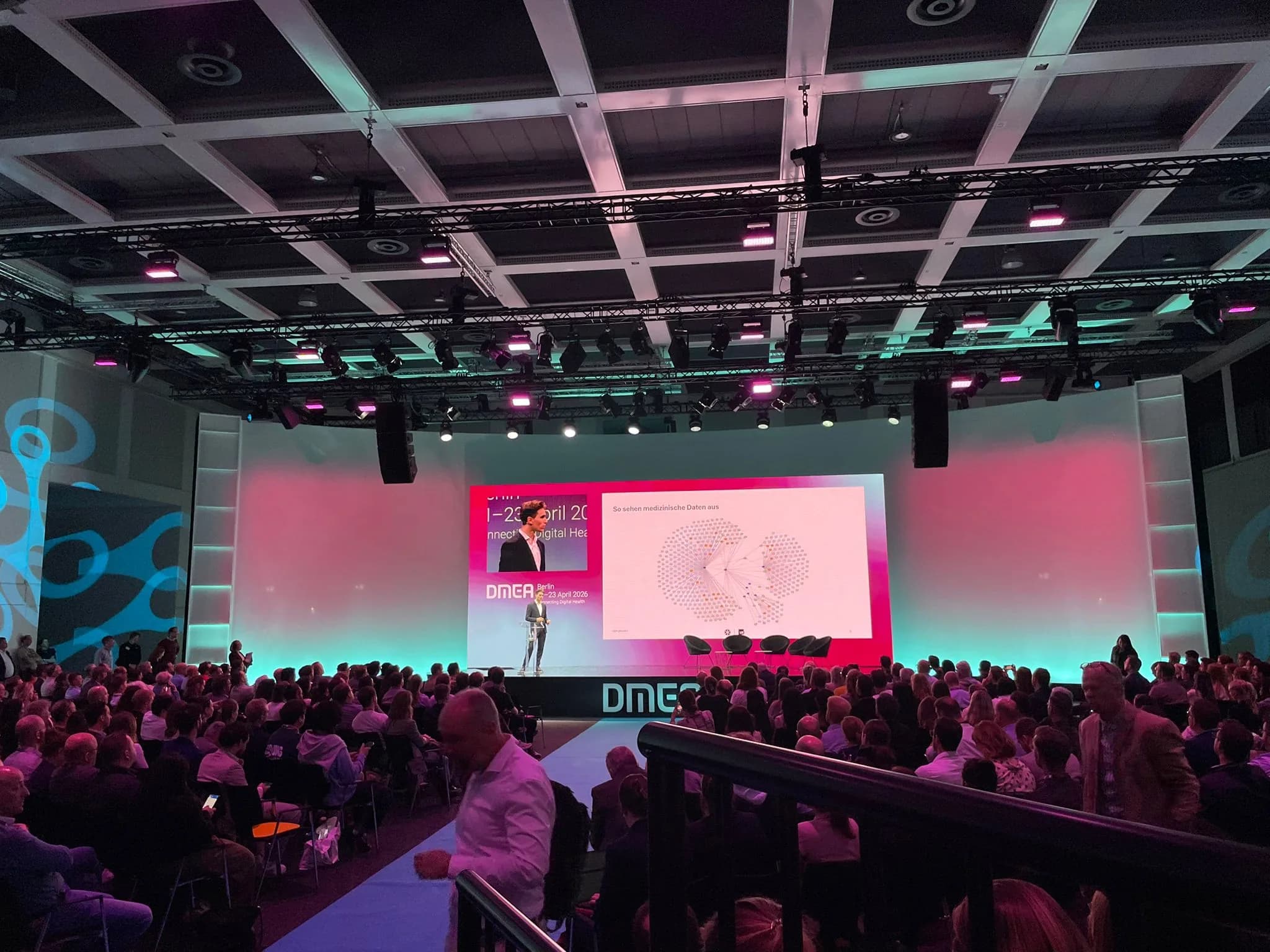
DMEA is over. Four days in Berlin, 900 exhibitors, more than 20,500 visitors. Europe's largest digital health trade show. We were on site with the team: Marius Knorr, Anton von Heyking, Laura Weiss, and Nils Schweingruber.
Marius on Stage 6.2
On April 21, Marius Knorr, AI Research Scientist at IDM, gave a talk in Hall 6.2. Title: AI Meets Interoperability. The question: where does AI in the hospital actually succeed or fail.
The thesis was simple. Interoperability is not a technical footnote. It is the precondition. Systems that cannot talk to each other cannot reason together. Whoever builds the bridges between HIS, RIS, PACS, and LIS builds the infrastructure for the next generation of clinical applications. This is exactly where AI agents come in.
Marius is a physician and AI researcher at IDM. That mix is what makes the difference. People who know hospital wards from the inside build different AI and software.

Before the Talk
Hall full, lights down, DMEA logo in pink above the stage. Same routine before every talk. One last pass through the slides, then up front.


Three Days of Conversations
Beyond the talk: hospital IT leads, hospital CEOs, researchers, competitors. Four days of stand-up coffee, quick meetings, long evening conversations. Not a single conversation circled around whether hospitals need AI. The questions were which models to deploy, on what infrastructure, and with what data.
Our position was the same in every conversation.
- Sovereign models, trained in Germany.
- Our own GPU infrastructure at UKE.
- No patient data in U.S. clouds.
- Vertically integrated from cluster to clinical application.


What Stays With Us
ORPHEUS is open medical speech recognition. Whatever HIS, whatever practice management system, whatever microphone: ORPHEUS works. No proprietary hardware, no single-vendor lock-in. Running in over 30 hospitals in daily clinical use, trained on more than ten years of clinical audio.
Marius showed ARGO 2.0 live on stage. Among other things, a FHIR agent that already writes discharge letters on its own, in production use at UKE. This year we are bringing ARGO to one of our largest reference customers. More on that soon.
DMEA confirms the same trend every year. The pressure to deliver on promises is rising. Patience for slideware is falling. We do not show mockups. What we demo runs live in hospitals. That is why we go to Berlin.
If you want to talk concretely, whether about speech recognition, clinical LLMs, or building your own AI infrastructure, write to hallo@idmedizin.de. We also come to the hospital.